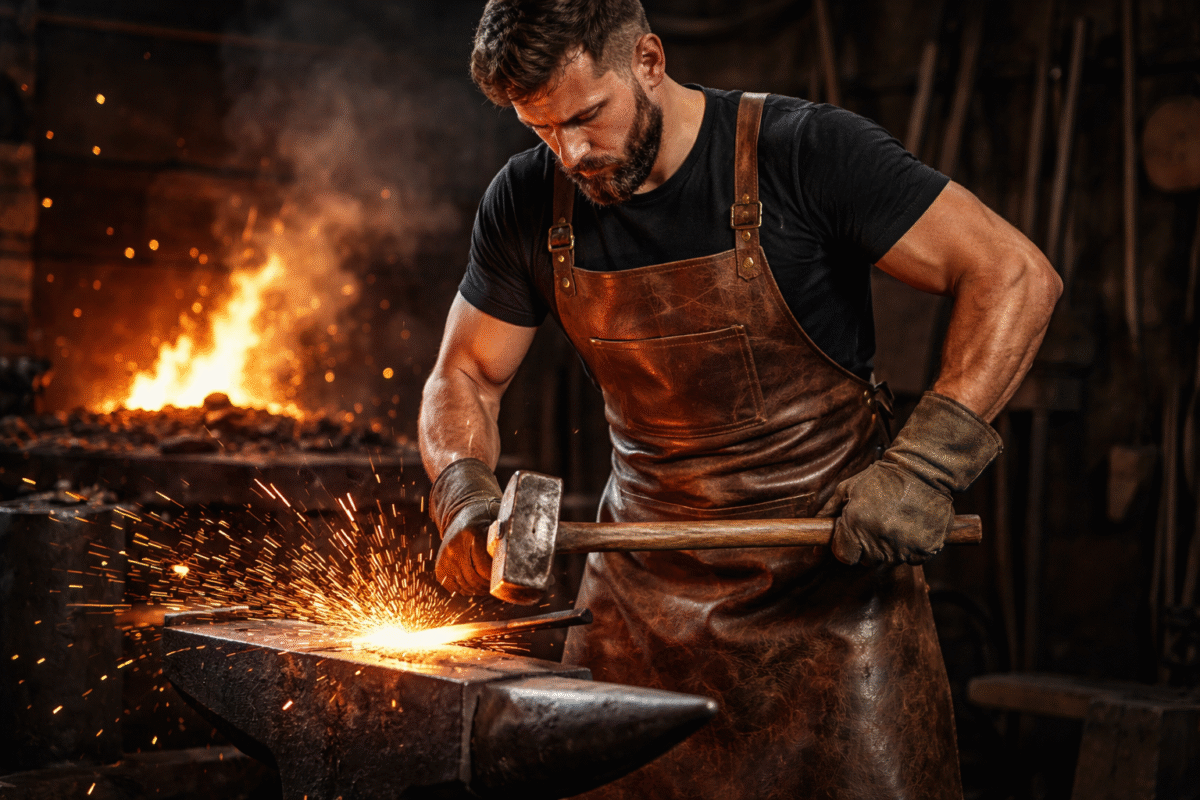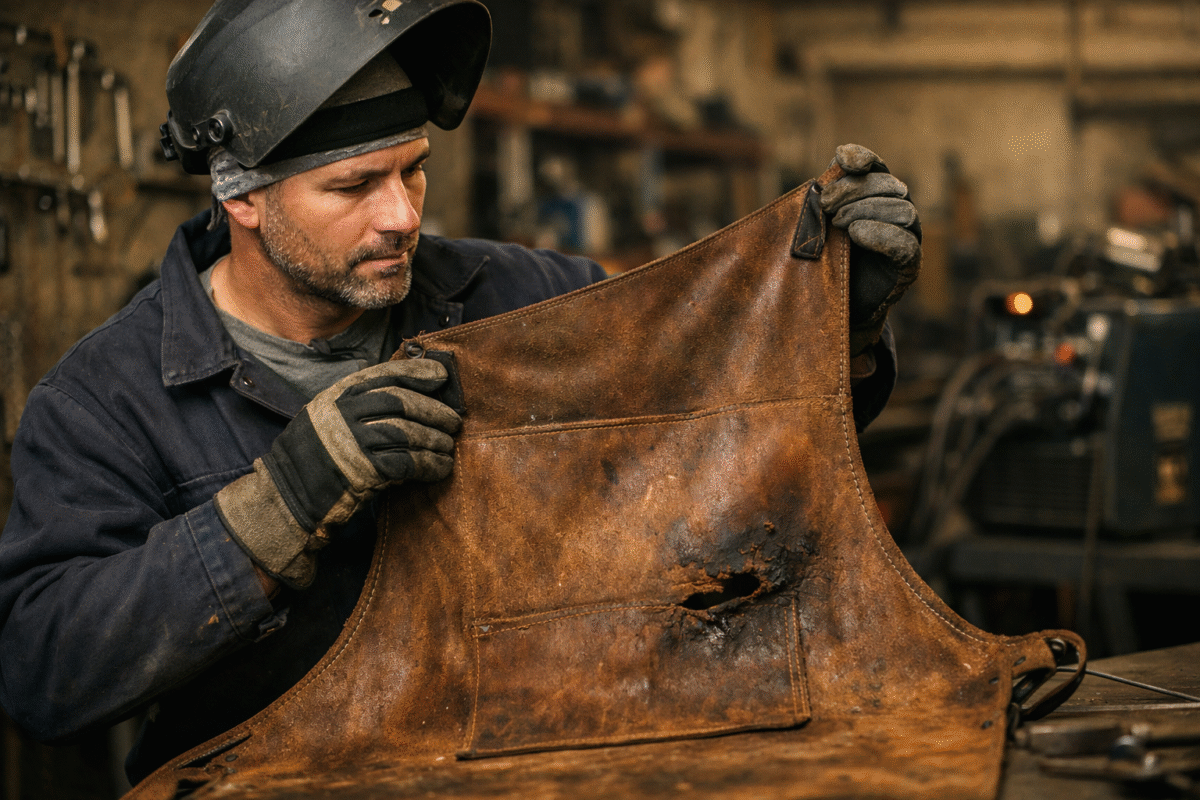


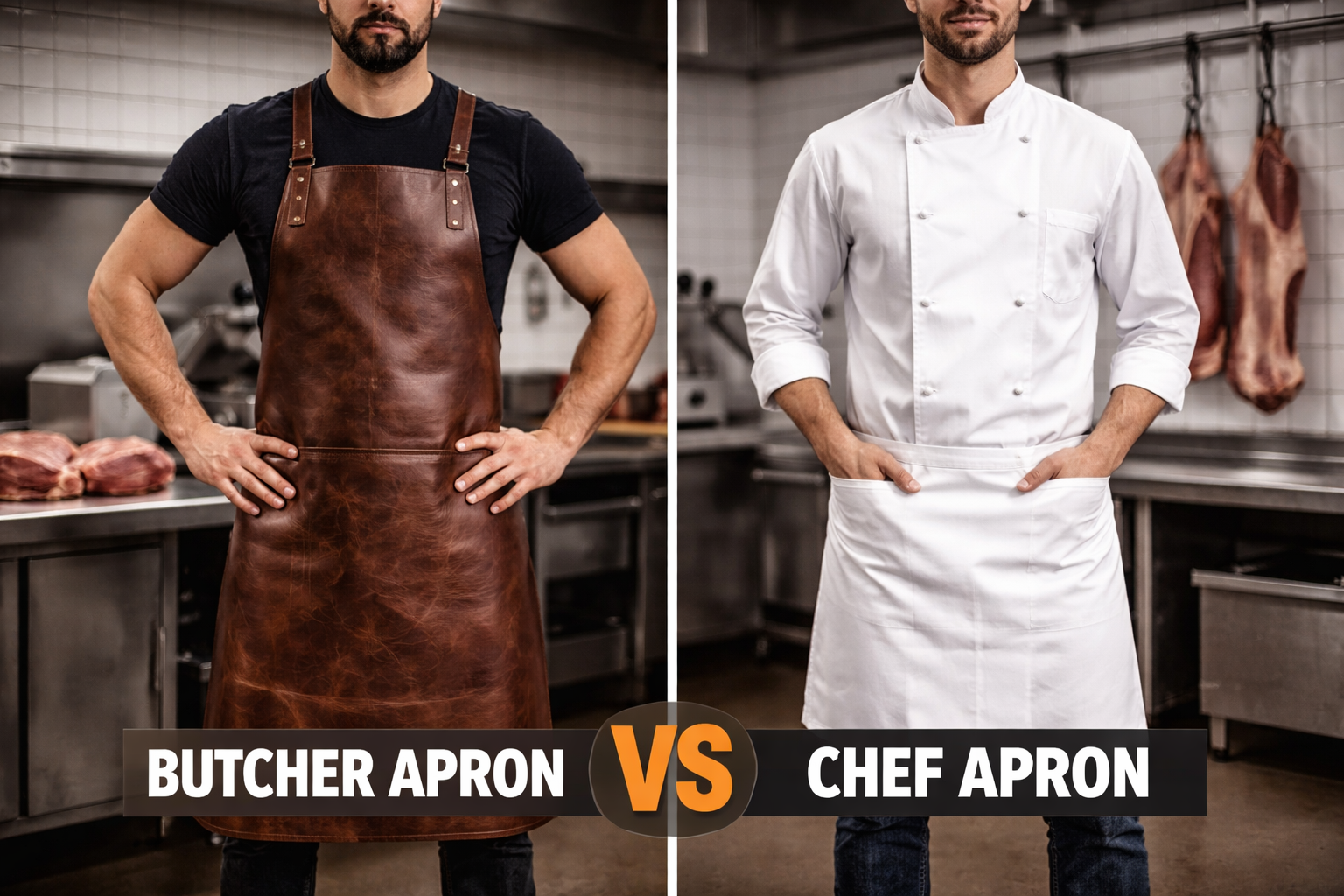
When it comes to working behind the counter, butcher apron vs chef apron, both can make a world of difference. Many people believe that any apron in the kitchen will do the job, but this is not the case for butchers. The butcher apron is more than just a different version of the chef apron; it is a tool that is specifically designed to withstand the rigors of heavy meat cutting and handling raw ingredients while maintaining safety and hygiene.
This blog post will go over the differences between a butcher apron and a chef apron, why these differences are so important, are chef aprons safe for butchers, and how using the right one can make a difference in your work.
Butcher Apron vs Chef Apron: The Main Differences
Purpose and Design: Built for Different Roles
A chef apron is designed to protect clothing from splashes, sauces, and spills in the kitchen. It provides moderate protection, is lightweight, and provides a good balance of comfort and flexibility for extended cooking sessions.
Butcher apron vs chef apron, a butcher apron is designed for a more extreme environment. A heavy duty butcher apron for raw meat handles knives, and bone saws, which require more extreme protection.
Why butchers need special aprons? The design of the leather butcher apron typically involves full coverage from the chest to the knees, as well as the use of thick and strong materials such as leather, waxed canvas, or thick cotton. This provides it with the ability to resist cuts, stains, and liquid penetration better than a chef apron.
Material Quality: Protection vs. Flexibility
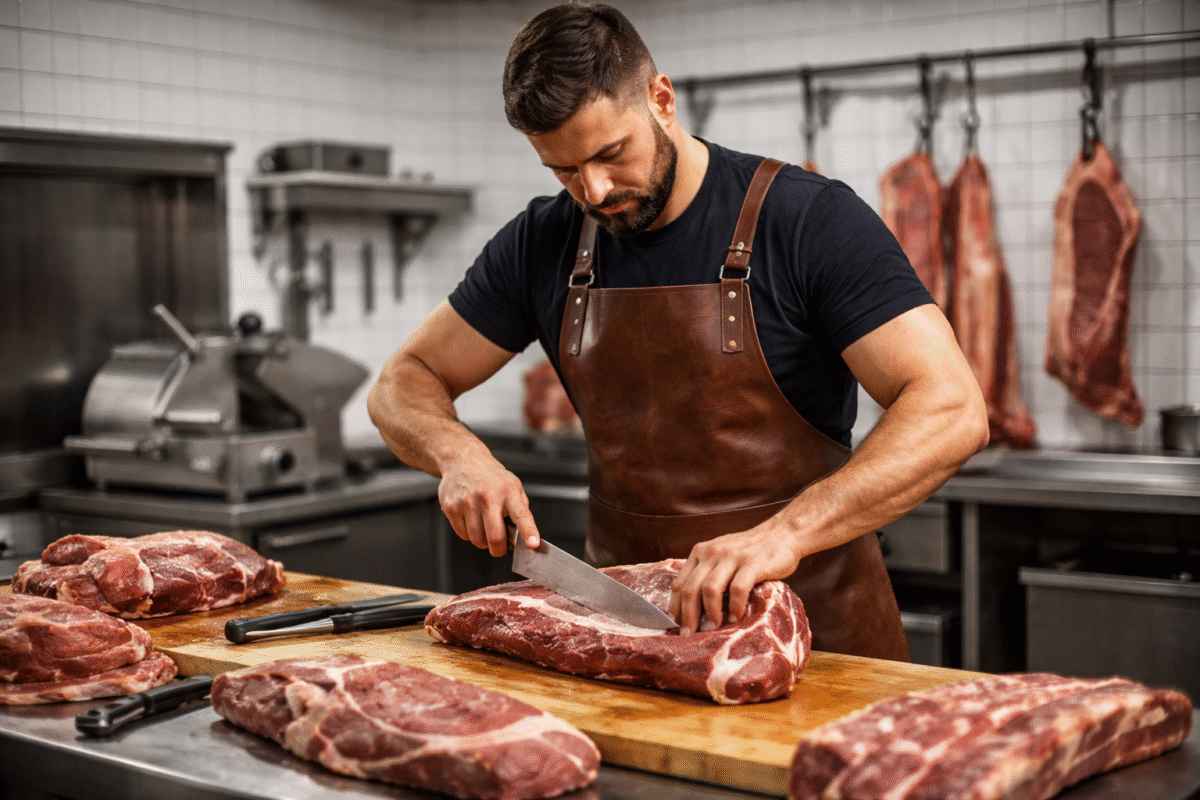
Butcher apron vs chef apron, the material differs in both. In commercial kitchens, chef aprons are typically made of cotton or poly-cotton fabric. They are lightweight and breathable, making them perfect for mobility and comfort during intense cooking activities. However, for butchers, the apron needs to prioritize protection and safety over flexibility.
Butcher aprons are made of thick materials that can withstand meat juices, fat, and blood without easily staining. Some aprons are even water-resistant or easy to wipe clean to maintain cleanliness. Leather aprons are the best due to their high resistance to cuts and splashes, while waxed canvas butcher apron provide a cheaper yet tough alternative.
Coverage and Fit: Why Size Matters
One of the most apparent differences between a butcher apron and a chef apron is coverage. Butcher aprons are longer and wider, covering most of the front side of the body to protect it from any contact with meat or liquids. The apron is designed to ensure that the clothing of the person wearing it always remains clean and hygienic, even when the person is engaged in intense activities such as cutting large portions of meat or trimming fat.
Chef aprons, on the other hand, are designed to ensure freedom of movement. They are shorter and made of lighter material that enables a chef to move quickly between stovetops, counters, and ovens. However, such aprons are not ideal for butchers, who are more likely to be injured or come into contact with contaminated substances.
Straps and Comfort: Endurance in Long Hours
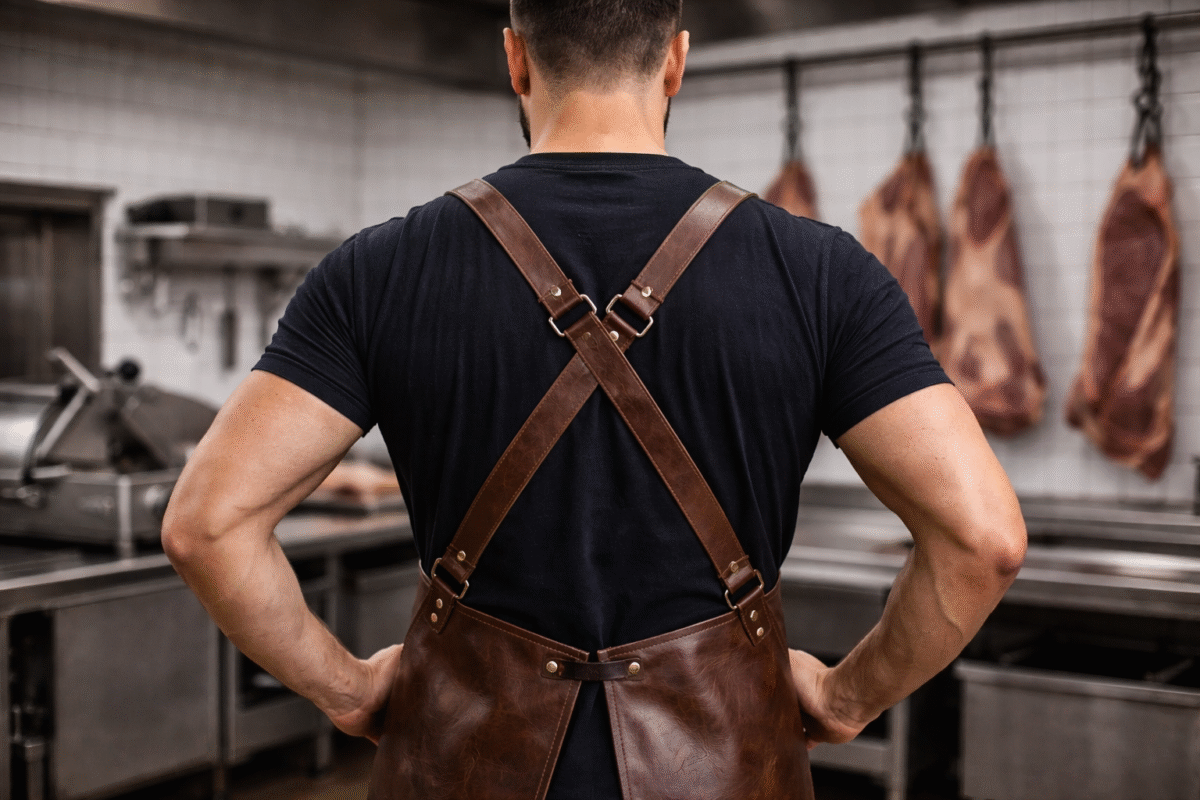
A day at the butcher’s block is long, and it requires comfort and the right distribution of weight. This is where butcher apron straps are important. Modern aprons come with cross-back straps that ensure the weight of the apron is evenly distributed across the shoulders, without putting any strain on the neck.
The majority of chef aprons come with neck loop straps, which are comfortable when the apron is light but can be quite uncomfortable when made of heavier materials and worn for a longer period of time. Cross-back straps are not only a comfort feature but a requirement for butchers who spend long hours cutting and cleaning. Want to have the best butcher apron with cross back straps? You can opt for Apron Forge’s Bronze Blade Hew Butcher Leather Apron.
Functionality and Features
Butcher apron is made to be a functional tool. The pockets are placed in a way that they can hold necessary tools such as knives, thermometers, or gloves. Some aprons have loops where towels or small cleavers can be hung. The thick material also serves as a safety feature in the event that the apron comes into contact with sharp objects or hot surfaces.
The chef apron is more straightforward and may be intended for aesthetic purposes or for convenience. The pockets of the apron are designed to hold pens, spoons, or order pads, which makes it perfect for a kitchen setting. But you can use it as an apron for butcher shop.
Safety Standards and Professional Use
The apron that belongs to a butcher’s work environment is considered part of the personal protective equipment (PPE). A butcher apron needs to meet safety and hygiene standards to protect against potential dangers such as cuts or contamination. Cut resistant butcher apron provides a secondary safety feature. The best example of a professional butcher apron is the Blackstone Blade Butcher Leather Apron.
Chef aprons are professional but do not have to meet the same standards for protection because the kitchen environment is different. This explains why butchers should never settle for using a chef apron for heavy work.
Durability and Longevity
A butcher apron for meat cutting can last for many years with proper maintenance. The strength of the material, the stitching, and the corners are all made to withstand the pressure of daily butchering work. Chef aprons are durable in a kitchen setting but simply will not last when subjected to the stress of meat handling and sharp tools.
The initial cost of a quality butcher apron may be more, but it is a wise investment for the long-term use and professional appearance of the product.
Hygiene and Maintenance
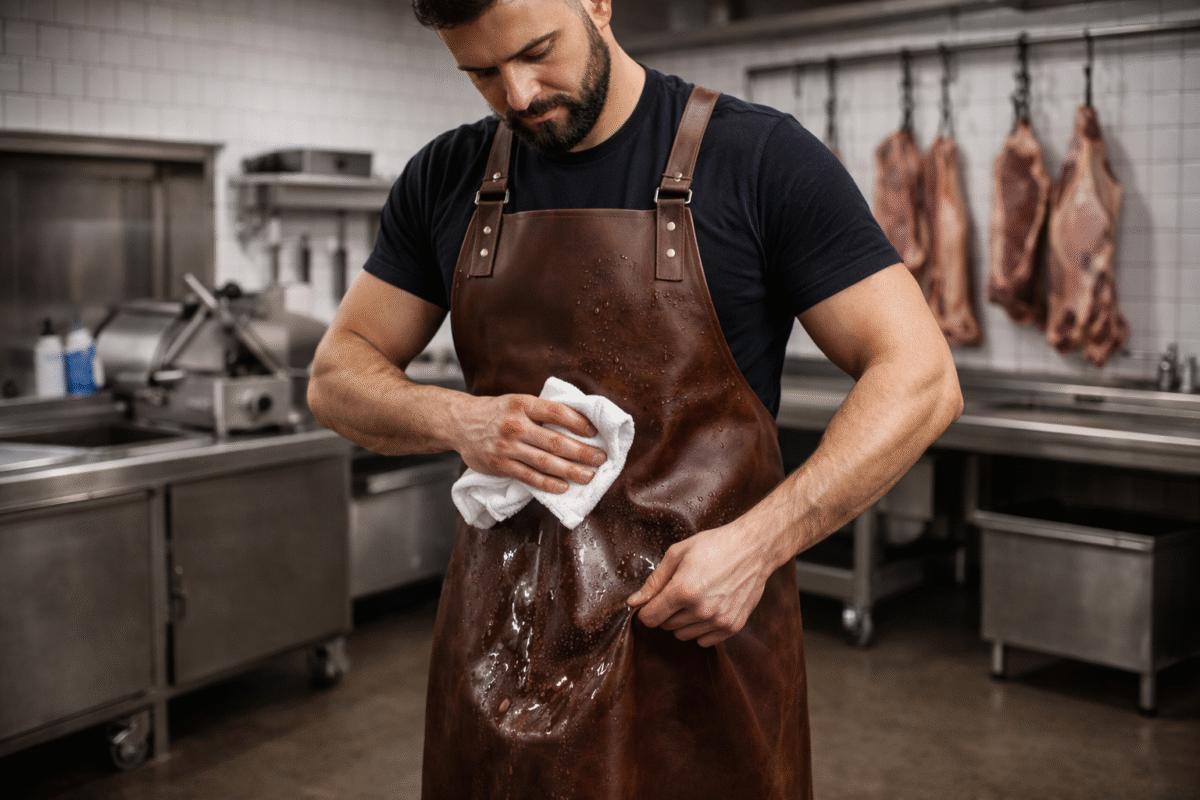
When it comes to food-related jobs, hygiene is a must. Butchers require aprons that are easy to clean and disinfect after every use. This is what the butcher apron is made for—its non-porous materials do not allow bacteria to grow and are resistant to odor. Some leather aprons can be wiped clean, meaning that the protective layer will last longer since it is not exposed to water.
Chef aprons, which are made of softer materials, can be machine-washed but need to be washed more often because of their absorbent properties. This would not be suitable for butchers who work with raw meat because absorbent materials tend to harbor bacteria if not properly cleaned.
Where to Buy the Best Butcher Apron?
When purchasing a butcher apron, it is important to consider quality and comfort as your primary concerns. You can opt for aprons made of high-quality materials such as leather or waxed canvas with cross-back straps for added support. Quality brands will provide you with proper craftsmanship and durability, which are important for professionals who use their equipment on a daily basis.
Apron Forge is one such brand that you can consider when looking for high-quality butcher aprons. They are experts at creating handmade aprons for butchers, chefs, and artisans who are concerned about both functionality and aesthetics.
Verdict: The Butcher Apron Clearly Wins
Butcher apron vs chef apron, both are designed for protection, their designs address two completely different sets of requirements. The butcher apron is the clear winner when it comes to its robust construction, high level of protection, and professional-grade materials.
So you know what apron do butchers use? Selecting a butcher apron over a standard chef apron is not a matter of personal preference. It is a question of safety, comfort, and functionality. For a butcher, this is a must-have tool that enables them to work with precision, cleanliness, and confidence, which are the hallmarks of true craftsmanship.